
Networks + Relationships
How artists and organizations build trust, connection, collaboration, and collective support across communities and disciplines.
Core Learning Question: How might we support arts groups to bridge across communities and disciplines, build relationships, access additional resources, and harness their collective power to advance equity?
What this story shows
The findings in this learning area suggest that strengthening networks and relationships is not only about increasing connection, but about shifting how artists and organizations experience, engage with, and move within the ecosystem.
This story shows that:
- Relationships deepened from initial connection to sustained, meaningful engagement.
- Belonging reduced isolation and strengthened how participants engage in their work.
- Trust enabled collaboration, resource-sharing, and mutual support.
- Networks functioned as infrastructure, creating conditions for ongoing collaboration and collective growth.
Relationships Created Conditions for Trust, Belonging, and Collective Support
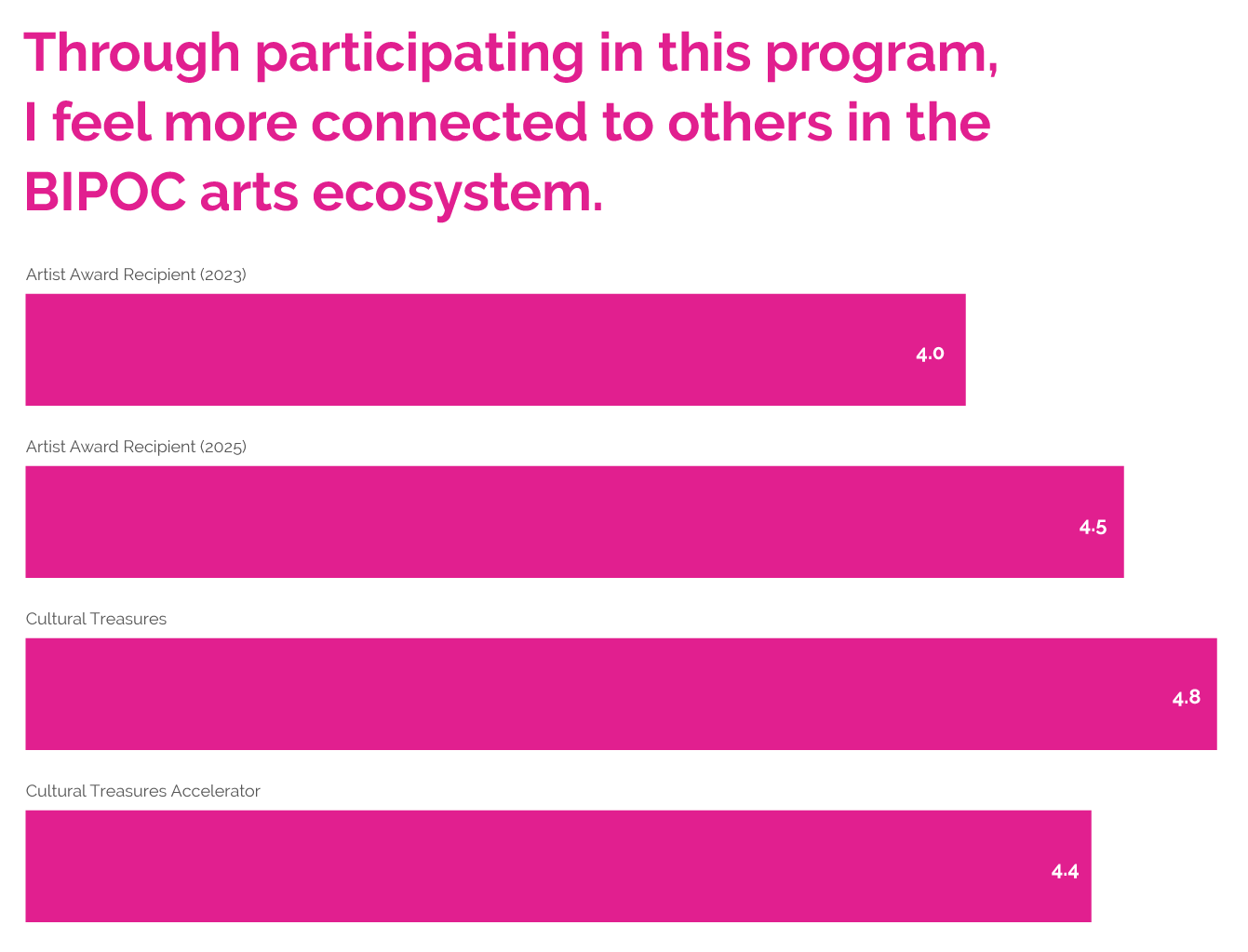
Across BANF programs, participants described a deepening of relationships and a stronger sense of connection to others in the BIPOC arts ecosystem. These relationships were not only professional contacts or short-term program connections. Participants described them as sources of trust, openness, mutual respect, shared learning, collaboration, and belonging. The network of BANF program participants became a form of support that helped artists and organizations feel less isolated and more connected to a larger ecosystem.
A. Deepened Relationships + Connection
Across programs, participants described a deepening of relationships and a stronger sense of connection to others in the BIPOC arts ecosystem. BANF’s cohort-based spaces created opportunities for artists and organizations to learn about one another’s practices, build meaningful relationships, and understand their work as part of a larger field of BIPOC-led cultural practice.
B. Built Trust
Trust emerged as a defining feature of the relationships built during BANF programs. Participants described cohort spaces where people could share resources, challenges, and opportunities openly, allowing collaboration to feel natural rather than transactional.
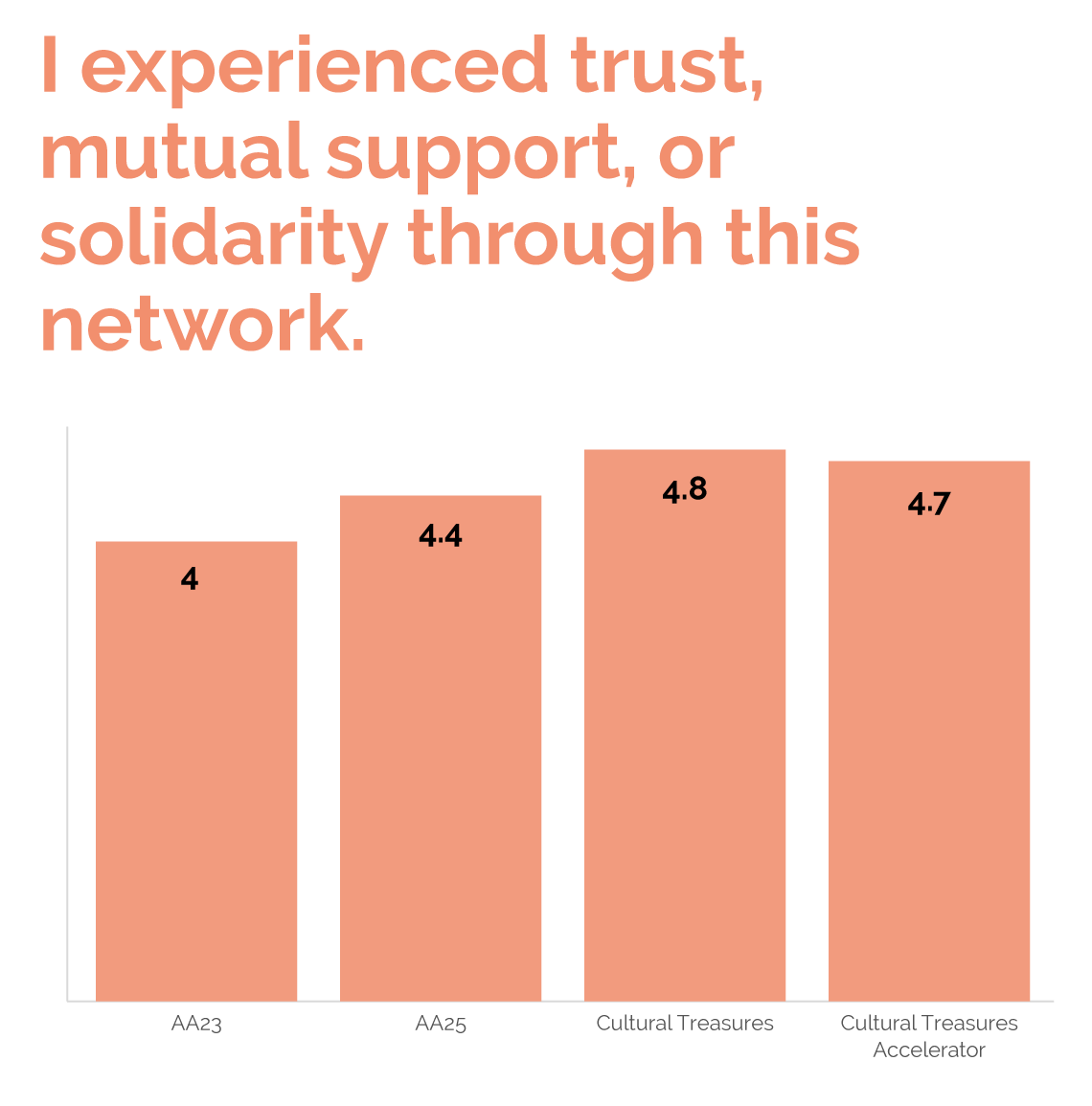
The trust that developed over time made collaboration feel natural rather than transactional, and it was powerful to see how openly participants shared resources, challenges, and opportunities. That sense of mutual support turned the cohort into a true community, one that I know will extend well beyond the duration of the program.
- Organizational Participant
C. Seeded New Collaborations + Partnerships
Relationships created pathways for sharing knowledge, opportunities, and strategies, increasing participants’ ability to navigate and benefit from the ecosystem. These relational shifts translated into stronger partnerships, increased collaboration, and expanded reach.
…BANF created a space grounded in trust, openness, and mutual respect ... This strengthened not only our relationships with cohort organizations, but also our understanding of our role within a larger BIPOC arts ecosystem - one rooted in collaboration, shared learning, and collective growth.
- Organizational Participant
Through our cohort meetings and events, I have learned about other artists and their creative practices and find myself constantly looking for opportunities to collaborate to bring cultural communities together.
- Artist Participant
D. Strengthened Belonging + Reduced Isolation
For many participants, deeper connections reduced feelings of isolation and strengthened their sense of belonging within the ecosystem. Participants described being met with intentional community through regular gatherings, collaborations, friendships, advocacy, shared vulnerability, collective grief, and celebration.
What stood out most during this time was how [I] was met with intentional community through BANF. The cohort ensured I was held through regular gatherings, collaborations, and friendships that extended beyond professional exchange. What emerged was more than support. It was advocacy, shared vulnerability, and unexpected moments of collective grief in response to the world around us, alongside genuine celebration of one another’s wins.
– Organizational Participant