
Ecosystem Infrastructure
The relationships, systems, tools, and supports that help artists and organizations strengthen their work and navigate the broader arts ecosystem.
Core Learning Question: What infrastructure and support is necessary to deepen and expand the capacity of BIPOC arts organizations and artists?
What this story shows
The findings in this learning area suggest that BANF supports artists and organizations in building the relationships, tools, systems, knowledge, and support structures that help sustain their work over time.
This story shows that:
- Infrastructure includes both internal capacity and collective ecosystem strength.
- Sustainability grows through strategic clarity, tools, and relationships.
- Cohort-based and relational spaces function as infrastructure themselves.
- Long-term capacity is built when organizations can plan beyond survival.
Infrastructure Took Shape Through Tools, Relationships, and Systems
Across BANF programs, participants described ecosystem infrastructure not as one single form of support, but as a combination of practical tools, internal systems, relationships, knowledge, and shared capacity. For some, infrastructure meant access to professional development, insurance, planning tools, or operational systems. For others, it appeared through stronger relationships, expanded partnerships, and the confidence to make decisions with long-term impact in mind.
A. Built Practical Tools + Relevant Skills
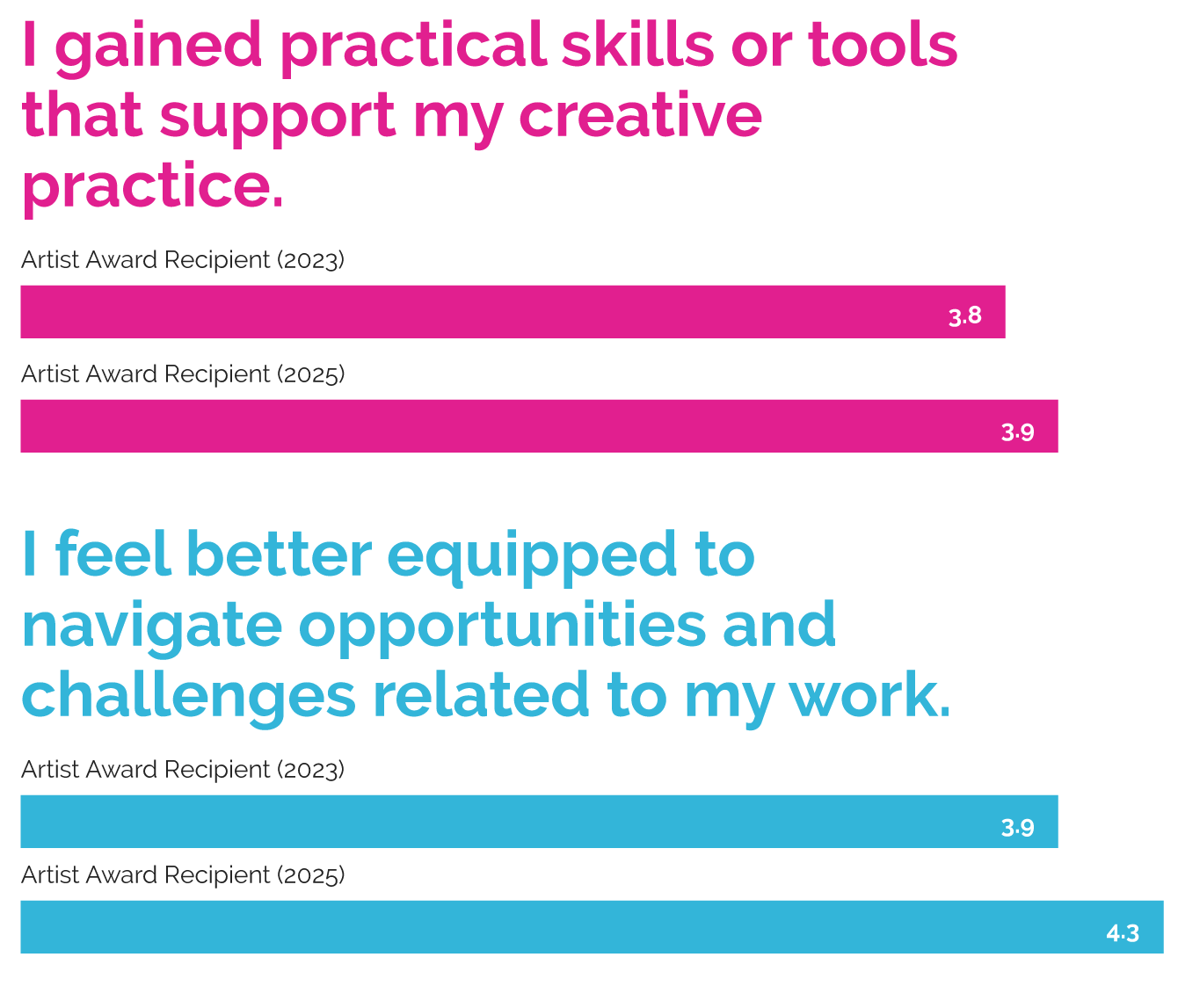
For artists, ecosystem infrastructure often appeared through the self-directed development of practical tools and skills that support sustainable creative practice. Participants described using resources to invest in professional development, conference travel, insurance, workshops, and other supports that helped them navigate opportunities and challenges related to their work.
It allowed me to continue investing time in that work with confidence. That investment paid off as being able to afford a specific insurance policy, helped secure a major exhibit project, and I was also able to put funds toward professional development through workshops and conference travel.
- Artist Participant
B. Developed Relational Infrastructure
BANF programs enabled participants to build relational and networked infrastructure that supports their work. Participants described reaching out to other organizations, expanding programming, building new relationships, and experiencing a sense of having a team behind them.
At the same time, some participants described limited visibility and interaction across cohorts and program types, suggesting opportunities to strengthen shared infrastructure through more intentional cross-network connection and collaboration.
We truly feel like we have a team behind us. People we can bounce ideas off of, artists we can collaborate with, and artists who can simply sit with us in the mud when things are hard. This is a group of artists with deeply different lived experiences, and that diversity has challenged the way I think, encouraged me, and inspired me to step up my own game.
- Artist Participant
We started reaching out to other organizations to participate in more programming, expanding our reach and building new relationships.
- Organizational Participant
C. Strengthened Internal Systems + Operational Clarity
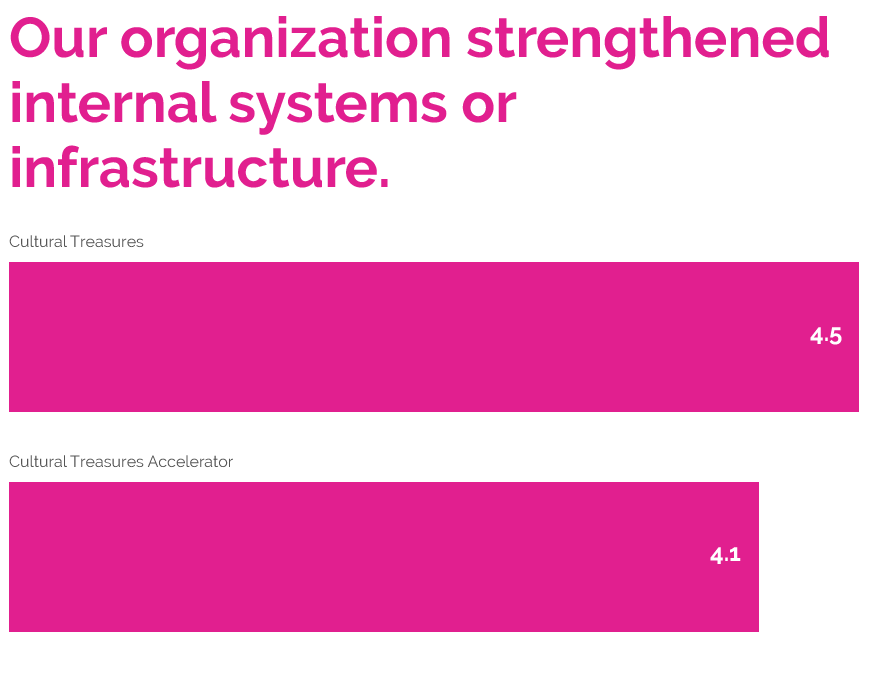
Participants described stronger internal infrastructure within their organizations. For some, this meant prioritizing documentation, accountability, strategic planning, and decision-making practices that support long-term impact.
The program reinforced the importance of building infrastructure alongside programming. We now prioritize documentation, strategic planning, and accountability as forms of care for our community and our work. Rather than expanding quickly, we focus on depth, stewardship, and making decisions that support long-term impact.
- Organizational Participant
D. Supported a Shift From Scarcity in the Present to Planning for the Future
Participants described a shift in how they operate: movement away from scarcity-driven decision-making, increased ability to plan, grow, and sustain work, and more intentional approaches to long-term viability. BANF support enabled participants to think beyond immediacy and make decisions with greater strategic clarity.
Participants also raised questions about what additional forms of support are needed to build long-term agency — including stronger access to decision-making spaces, knowledge-sharing, and power-building resources that help artists and organizations navigate systems independently over time.
The program reinforced the importance of building infrastructure alongside programming. We now prioritize documentation, strategic planning, and accountability as forms of care for our community and our work. Rather than expanding quickly, we focus on depth, stewardship, and making decisions that support long-term impact.
- Organizational Participant