Learning & Impact
BANF’s learning and evaluation work is rooted in a simple belief: communities should have the power to define what matters, make meaning from their own experiences, and shape the stories told about their work.
Since its launch, BANF has treated evaluation not as a final report or a fixed measure of success, but as an ongoing practice of listening, reflection, relationship-building, and adaptation. Across three phases of learning, BANF has worked with artists, organizations, evaluators, funders, program leaders, and Community Storytellers to better understand what it takes for Houston’s BIPOC arts ecosystem to thrive.
This work helps BANF ask deeper questions about how resources move, how relationships grow, how cultural leaders are supported, and how the brilliance of BIPOC artists and organizations is recognized across Houston.
Learning + Reflection Process
BANF’s learning and evaluation process has evolved alongside the initiative itself. Each phase has built on the last, moving from early listening and framework development toward deeper community-led sensemaking and storytelling.
In BANF’s first phase of evaluation, Change Elemental supported a listening and learning process that helped identify community needs and generate foundational frameworks for BANF’s ongoing work. This phase created a shared foundation for understanding the initiative’s purpose, values, and early priorities.
In the second phase, BANF deepened its learning practice through the 2024-25 Community Storyteller cohort. In partnership with Working Partner, this phase included outcomes harvesting with the Houston Cultural Treasures cohort, the 2023 Artist Award survey, and listening sessions with BANF’s leadership team. This phase expanded the role of community voice in interpreting what was emerging across BANF’s programs.
In the third phase, BANF partnered with Hatch Creative Strategy and the 2025-26 Community Storyteller cohort to synthesize what had been learned across BANF’s first 5 years. This phase included a participant experience survey, additional documentation of BANF’s process and outcomes, and collective sensemaking across programs. Together, these activities helped surface the learning stories that now guide how BANF understands its impact, questions, and future possibilities.
Across all three phases, BANF’s learning journey has been emergent, relational, and iterative. Rather than following a predetermined blueprint, the process has grown through experimentation, trust, and ongoing dialogue with the people closest to the work.
Our Learning Philosophy
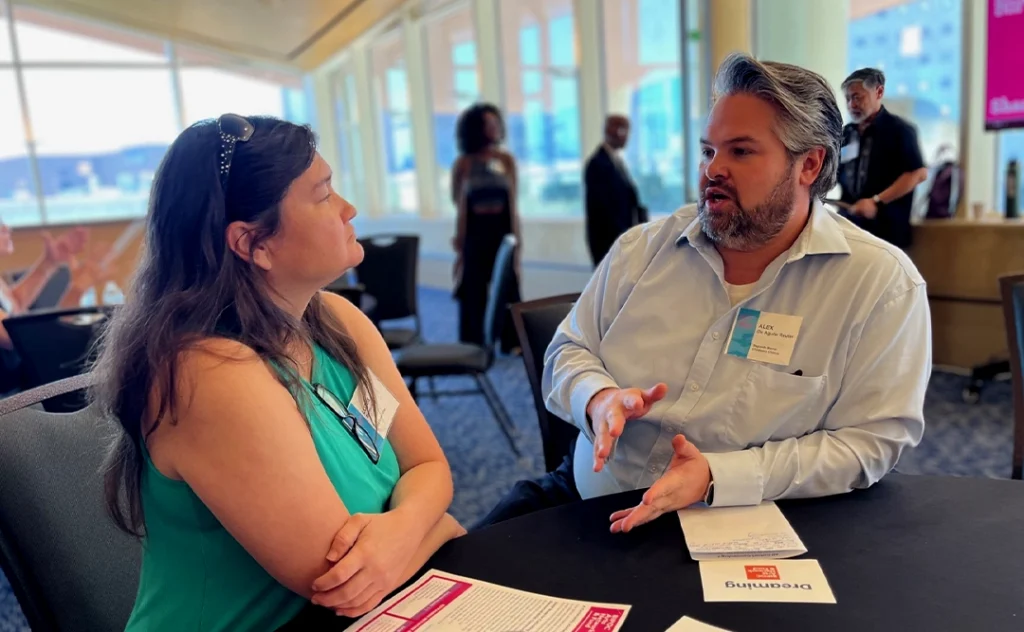
This means evaluation is not only about collecting data. It is also about creating the conditions for people to reflect honestly, interpret meaning together, and name what they know from lived experience. BANF’s learning practice values stories, relationships, artistic ways of knowing, and community interpretation alongside surveys, interviews, and other evaluation tools.
This approach also recognizes that impact in the arts is not always immediate, linear, or easy to measure. Some changes appear as new collaborations. Some emerge as greater confidence, visibility, or clarity. Some take shape as stronger internal systems, deeper trust, or the ability to move from survival toward long-term planning. Some are still unfolding.
Through this learning work, BANF continues to ask:
- How do BIPOC artists and organizations define sustainability for themselves? What kinds of infrastructure help cultural work endure?
- How do trust, belonging, and relationships create the conditions for collective power?
- What does it take to shift narratives so BIPOC artists and cultural organizations are recognized as central to Houston’s identity and future?
Equitable + Sustainable Resourcing, Ecosystem Infrastructure, Networks + Relationships, and Narrative Shift.
The Role of Community Storytellers
Community Storytellers are central to BANF’s learning practice.
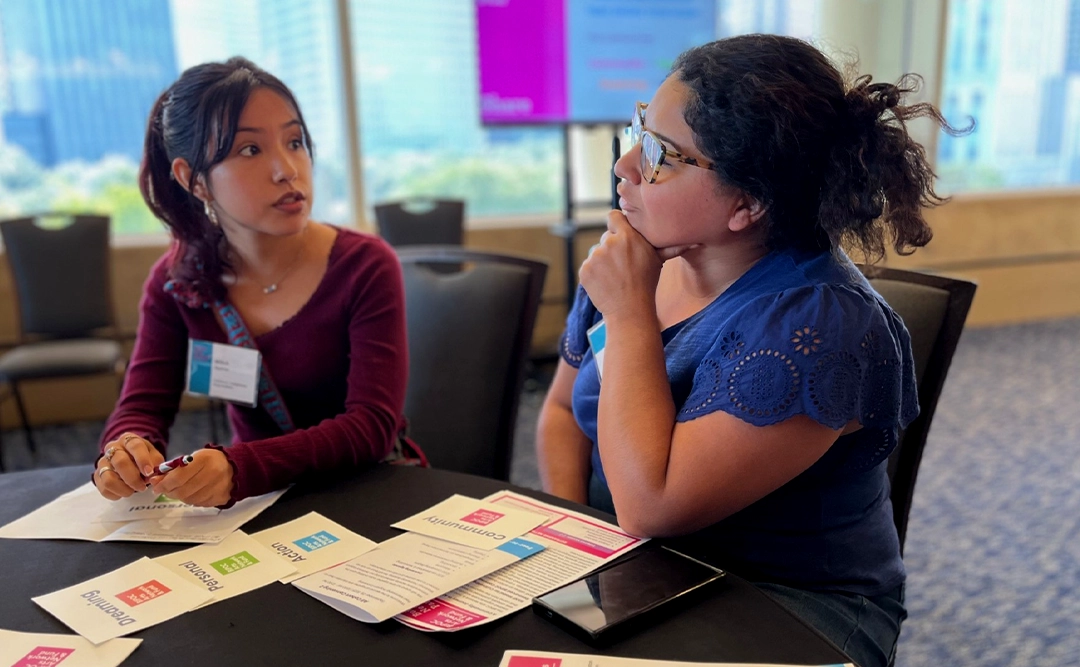
Moving together as a learning cohort, BANF Community Storytellers have participated in shared practices of listening, reflection, and sensemaking alongside evaluation partners and program leaders. They gathered stories through interviews, program reflections, surveys, and meaning-making discussions across BANF’s programs, participants, and leaders
Their role has gone beyond documentation. Community Storytellers listened for patterns, tensions, and possibilities emerging across the BANF initiative and network. They helped weave together what participants shared, what evaluation processes surfaced, and what they observed across the ecosystem. From this work, they shaped learning stories that hold both evidence and lived experience, illuminating how BANF has been felt, practiced, and evolved across the network.
The 2024-2025 Community Storyteller cohort: Beatriz Bellorín, Sha Davis, Shawanna Renee Godfrey, Torrina Haris, Walter Hull, Ruerob Jackson, Alicia Olivo, Trisha Morales, Noah Rattler, and Keda Sharber.
The 2025–2026 Community Storyteller cohort includes Beatriz Bellorín, Sha Davis, Walter Hull, Trisha Morales, Noah Rattler, and Keda Sharber.
Together, their work reflects BANF’s commitment to narrative power: the belief that communities should not only be included in evaluation, but should help shape how learning is interpreted, held, and shared.
What is needed
BIPOC artists, arts and culture organizations, and arts collectives are transforming systems to create new possibilities and thriving futures. To realize their dreams for themselves and Houston, grantees shared what is needed from BANF and the wider BIPOC arts ecosystem:
- Abundant and equitable investments
- Shifting power, narratives, and systemic barriers
- Space to dream and create
- Network and technical support
What We Are Learning
BANF’s learning work has surfaced a growing body of insight about what supports BIPOC artists and cultural organizations in Houston.
Across programs, participants described the importance of flexible, trust-based funding that allows them to respond to their real needs, plan beyond crisis, and build capacity on their own terms. They also described the value of cohort spaces, peer relationships, and the feeling of being seen, affirmed, and supported by a broader BIPOC arts community.
The learning stories we have gathered also point to important questions for the future. BANF is continuing to explore what it takes to sustain relationships after formal programs end, how to build stronger shared infrastructure across the network, how to make learning language more accessible, and how internal shifts in confidence and visibility can contribute to broader narrative change across Houston’s arts ecosystem.
This is the work of learning: not only celebrating what has been built, but staying in relationship with the questions that remain.
Looking Ahead
BANF’s learning journey is ongoing. As the initiative continues to evolve, BANF will keep using evaluation as a tool for reflection, adaptation, and community-defined knowledge.
The goal is not only to understand what BANF has done, but to learn what becomes possible when BIPOC artists and organizations have the resources, relationships, visibility, and trust they need to create freely, lead boldly, and shape Houston’s cultural future.
Through this work, BANF continues to nourish an arts ecosystem where cultural leaders are recognized not only for what they produce, but for the histories they carry, the communities they build, and the futures they help imagine.